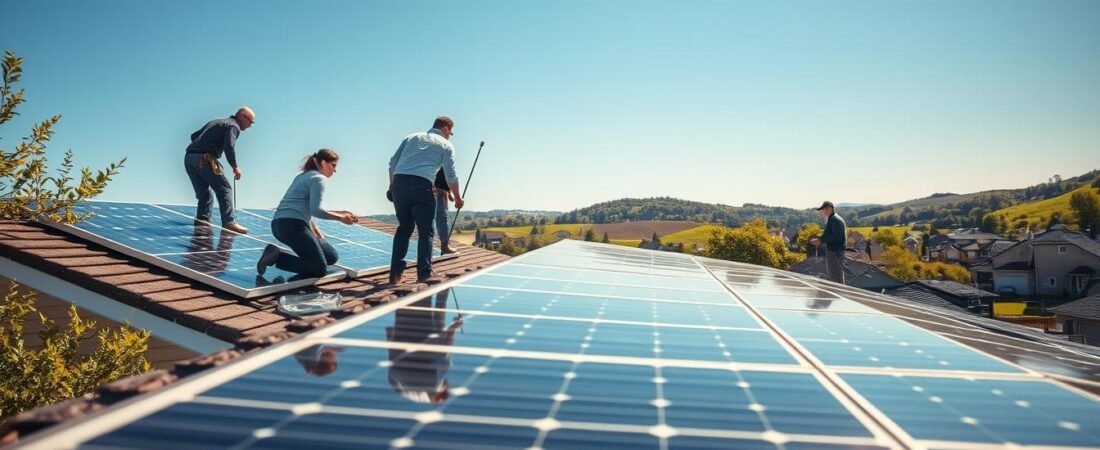
Homeowners in Kingsport can save about $1,305 per year by choosing a reliable renewable energy path. This guide helps you weigh options, find a trusted installer, and plan a secure roof mount for lasting benefits.
We keep the process simple and clear. You’ll learn what to expect during installation and how careful planning boosts system efficiency. Our tips aim to protect your investment and the environment.
For a smooth transition, consider professional help. Check out our services to connect with experienced teams who handle permits, design, and safe mounting.
Start with clear goals and a local expert. With the right team, your system will deliver steady savings and peace of mind for years.
Why Switch to Solar Energy in Kingsport
Choosing clean, local energy can cut your household bills and increase property value. The average homeowner in this area can save about $1,305 per year by adding quality solar panels to their roof.
Over 20 years, those savings add up. High-quality solar panel systems offset a large share of your energy costs and help protect you from rising utility rates.
Homeowners also gain more reliable power and reduce dependence on the traditional grid. That stability often makes properties more appealing to buyers.
- Predictable energy costs for each year
- Reduced local emissions and cleaner air
- Durable systems that deliver reliable power for many years
Overall, installing a solar panel system is both an economic and environmental step. It secures long-term savings while supporting a cleaner community.
Understanding the Solar Panel Installation Kingsport TN Process
A clear plan makes the whole installation process faster and less stressful. The workflow has three main steps: site assessment, permitting and equipment, then final system inspection.
Site Assessment
A certified installer inspects your roof to check sunlight exposure and mounting options. Visits can be virtual or in person, depending on your schedule. Proper planning during this step saves time and avoids surprises later.
Permitting and Equipment
Your chosen company handles permit submission and orders the equipment. That includes racking, wiring, and inverters. Most of the heavy lifting happens before crews arrive at your home.
System Inspection
Actual panel installation usually takes one to three days. After the crew finishes, a town representative inspects the system and approves final interconnection. Then your solar system can begin producing power.
| Phase | Who Handles It | Typical Time | Key Outcome |
|---|---|---|---|
| Site Assessment | Solar installer | 1 visit (virtual or in person) | Roof layout and shade analysis |
| Permitting & Equipment | Company | Days to weeks | Permits filed; equipment ordered |
| Physical Work | Installer team | 1–3 days | Racking, panels, wiring installed |
| Final Inspection | Town representative | 1 day | Approved interconnection |
How We Evaluate Local Solar Installers
We compare local firms by measuring warranties, customer reviews, and the clarity of their pricing.
Warranty standards matter. Our top picks must offer a 25-year product warranty and at least a 10-year workmanship warranty. These guarantees protect your long-term investment and reduce risk.
Reputation is key. We analyze each company’s customer reviews and Better Business Bureau score. High marks and consistent feedback show dependable service and quality workmanship.
Accessibility and transparency also weigh heavily. We prefer companies that provide clear pricing and an easy, free site consultation. That helps owners understand timelines and costs before work begins.
- Rankings reflect reviews, service area, and certifications.
- We favor companies with proven local project success.
- Transparency in pricing and prompt site visits earn higher scores.
By examining these criteria, we recommend only those solar companies that meet high standards for quality, reliability, and customer care.
Top Rated Solar Companies Serving Your Area
Choosing the right provider affects project timelines, costs, and long-term satisfaction. This short guide profiles trusted companies and explains how to pick the best partner for your home.
Local Installer Profiles
Sundance Power Systems Inc (Weaverville, NC) scores a 4.80 rating for consistent service and strong reviews.
Future Smart (Bristol, TN) helps with permits to smooth the panel installation process.
Ecological Energy Systems (Bristol, VA) offers cleaning and maintenance to keep your system at peak output.
Collaborative Solar, LLC (Boone, NC) focuses on consultation to match options to your needs.
Choosing the Right Partner
Look for clear pricing, verified reviews, and a workmanship warranty. Those factors predict long-term value and fewer surprises.
- Compare ratings and ask for recent references.
- Confirm permit support and service offerings.
- Verify warranties and expected timelines.
| Company | Key Offer | Rating / Benefit |
|---|---|---|
| Sundance Power Systems Inc | Full service | 4.80 rating |
| Future Smart | Permit assistance | Streamlined permitting |
| Ecological Energy Systems | Cleaning & maintenance | Ongoing service |
Use this guide to compare the best solar companies and pick a local installer that offers clear pricing and a solid workmanship warranty.
Financial Benefits and Cost Considerations
Knowing what affects your total investment makes budgeting simpler. This section breaks down the main drivers of cost and the typical long‑term savings you can expect.
Factors Influencing Your Total Investment
The total cost of a solar panel project depends on roof orientation and the efficiency of the equipment you choose.
Upfront expenses can be significant, but many homeowners recover their outlay over time. On average, households save about $16,000 over 20 years on energy bills.
Many companies offer financing and battery options to spread the initial cost. Adding a battery can increase flexibility and power resilience for your home.
- Roof direction and shading affect output and system sizing.
- Higher efficiency panels lower long‑term cost per kWh.
- Financing and incentives reduce the time to see a return.
| Factor | Effect on Cost | Typical Outcome |
|---|---|---|
| Roof orientation | Changes required system size | May raise cost if more panels are needed |
| Equipment efficiency | Higher upfront cost | Lower long-term energy cost |
| Financing & battery | Spreads payments; adds resilience | Smoother cash flow; higher initial outlay |
| Incentives | Reduce net cost | Shorter payback time |
Installing solar panels is a long‑term choice. Review your household’s future energy needs before partnering with a company.
Available Solar Incentives for Tennessee Homeowners
Smart use of available incentives can cut payback time and improve long‑term returns.
The federal investment tax credit remains a major benefit. Homeowners can apply it to lower the upfront cost of a solar panel system and reduce tax liability the year you go live.
Local rebates and utility programs vary by provider. Many utilities offer credits, net metering, or performance-based incentives. Check local rules to see what applies to your address.
Adding a battery sometimes unlocks extra rebates or state-level discounts. That can further lower final cost and increase resilience.
- Federal tax credit lowers the net price of a solar panel project.
- Utility‑level programs change by region and may offer rebates or enhanced rates.
- Bundle incentives with financing to shorten payback time.
Do your homework to maximize savings. Start with a local resource like the Tennessee incentives lookup and confirm what your utility offers before you commit.
Environmental Impact of Renewable Energy
Generating clean power at home cuts emissions and improves local air quality. By producing renewable energy on-site, households lower their carbon footprint in measurable ways.
Switching to solar power can prevent roughly 80 pounds of CO2 per year in some regions. Over many years, that reduction adds up and helps protect community health.
A well-maintained solar system also reduces reliance on nonrenewable power sources. That means fewer pollutants from fossil fuel plants and a clearer path to long‑term sustainability.
- Less CO2: Clean generation cuts greenhouse gases and local pollution.
- Lower demand: Every kilowatt of solar power reduces fossil fuel use.
- Community benefit: Choosing panels supports local stewardship and the global climate.
Choosing panels is a practical step toward environmental stewardship. It helps future generations and supports a more resilient energy mix today.
Conclusion
Choosing the right local provider sets the stage for long-term savings and reliable power.
Investing in a solar panel installation can cut household cost and boost property value over the years. Use this guide to weigh offers and compare companies before you commit.
Pick a firm that inspects your roof, clearly explains timelines, and backs work with solid warranties. That attention to detail keeps your system productive and lowers unexpected expenses.
Spend a little time researching local solar companies now. The effort will pay off in reliable energy, lower bills, and peace of mind for years to come.