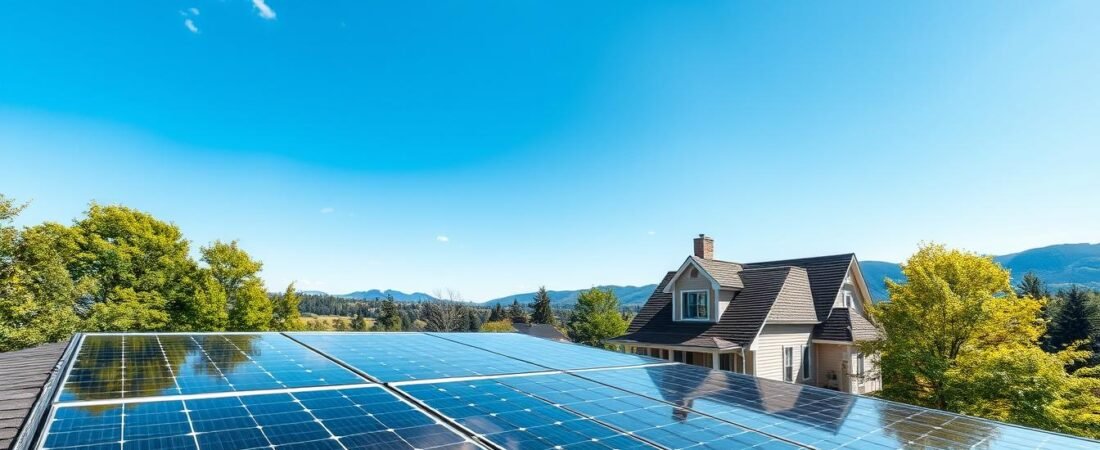
Understanding the average rate is the first step to smart home energy planning. As of April 2026, the average system price is $2.69/W including installation. This figure helps homeowners estimate how much of an investment they will make and how long it might take to see real savings.
Switching to rooftop generation can lock in predictable energy bills for 25 to 30 years. Our guide shows how incentives, tax credits, and system size affect total outlay and payback time. For a deeper look at Vermont pricing and incentives, see the Vermont pricing guide.
What to do next: compare multiple quotes, check installer warranties, and weigh cash versus financing. With the right plan, your new system can cut bills, boost home value, and deliver steady power for years.
Understanding the Solar Panel Cost Burlington Homeowners Can Expect
Clear pricing and size benchmarks let homeowners match a system to real electricity use.
Average System Pricing
The local average system size is about 17.55 kW, which typically runs near $47,114. Smaller installs, like a 5 kW setup, average around $13,425. These figures give a quick baseline for budgeting and comparing quotes.
Prices can vary from roughly $40,047 up to $54,181 for larger 17.55 kW systems. Using the cost-per-watt metric helps you compare true value across installer bids.
Larger systems need more equipment and labor, so the total price rises with size. A system that matches your annual electricity use can sharply cut or eliminate monthly bills.
Most homeowners see solid returns over the 25 to 30 years the system typically operates. Ask installers for detailed quotes that break out panels, labor, and electrical components to understand the full system price and expected payback.
Key Factors That Influence Your Total System Price
A handful of practical factors explains why two neighbors can get very different bids.
Roof condition and orientation affect how much sun your panels capture. A steep, south-facing roof often needs fewer modules than a shaded or complex roof, which lowers the final system price.
Installer experience and business practices matter. Local companies familiar with permits and codes can speed installation and avoid hidden fees.
Equipment quality influences long-term value. High-efficiency modules cost more up front but deliver more power in limited space and reduce the needed system size.
- Check shading and estimate annual electricity yield before you accept a quote.
- Ask installers to review your electrical panel and roof structure.
- Compare prices, warranties, and available incentives to find true value.
“Prioritizing reliable equipment over the lowest price often saves money over the system’s lifetime.”
Available Incentives and Rebates to Lower Your Investment
Stacking federal and state support can shrink the net price of an installation dramatically. The 30% federal tax credit is the largest single incentive and applies to buyer purchases of panels or battery storage.
Homeowners in the region can expect sizable lifetime savings when incentives are applied. Using current programs, a typical household could realize about $43,670 in electricity savings over 25 years.
Federal and State Tax Benefits
Start with the federal tax credit, then ask about state or local rebates. Many utility companies add cash-back offers that reduce the upfront price and shorten the payback period.
- The 30% federal tax credit lowers your upfront investment and makes systems more accessible.
- Local rebates and performance incentives can trim the net installation price further.
- Whether you pay cash or use financing, incentives improve your return and reduce total payback years.
- Professional companies handle paperwork to help ensure you claim every eligible benefit.
Always confirm which state-level incentives apply to your home. For a local checklist and resources, see the Vermont state incentives guide.
“Combining federal credits with local rebates often turns a multi-year investment into immediate savings.”
How to Evaluate and Compare Solar Quotes
Know what to ask so each estimate can be compared apples-to-apples.
Start with price per watt to compare bids fairly. Ask each company for both a cash price and a financed quote so you can see fees and interest that affect the final price.
Require a line-by-line breakdown of the panels, inverters, mounting hardware, and labor included with the installation. If one quote is much lower, be cautious — it may use lower-quality equipment or skip needed work.
- Request projected electricity production and expected annual savings based on your bills.
- Confirm the quote includes a roof inspection and any repair allowances before signing.
- Look for a performance guarantee and detailed warranty terms from installers.
- Compare at least three quotes to find the best balance of price, equipment quality, and warranty.
| Key Item | What to Check | Why It Matters |
|---|---|---|
| Price per Watt | Compare same system size and specifications | Shows true price differences across companies |
| Financing vs Cash | Ask for both figures | Reveals fees and total money paid over time |
| Production Estimate | Annual kWh and projected bill savings | Determines payback period and long-term savings |
| Warranties | Performance and equipment length | Protects your investment and future power output |
“A shorter payback period means your system starts saving you money sooner.”
Selecting a Reputable Solar Installer for Your Home
Picking the right company means better performance, safer work, and fewer surprises.
Checking business experience
Look for firms with at least five years in business. For example, Vermont Solar Engineering at 431 Pine St has an expert rating of 83, which indicates solid local experience.
Verifying licenses and insurance
Always confirm licenses and proof of insurance. Licensed crews protect your home and workers during panel installation.
Reviewing customer feedback
Read recent reviews on Google and Yelp to see how companies handle schedules, quotes, and warranties.
- Ask if technicians are NABCEP-certified for verified expertise.
- Request a written labor warranty; a reputable installer should offer at least ten years.
- Confirm experience with battery storage if you want backup power from the sun.
- Demand transparent pricing and a full written quote before work begins.
| Check | What to Request | Why It Matters |
|---|---|---|
| Business Tenure | Years in operation; local references | Shows stability and post-install support |
| Licenses & Insurance | State license numbers; certificate of insurance | Protects home and workers from liability |
| Warranties | Labor and performance guarantees (10+ years) | Secures repairs and long-term power output |
| Customer Reviews | Recent ratings and project examples | Reveals service quality and adherence to price/quote |
“A strong warranty and transparent quote make installation worry-free.”
Conclusion
Investing in a quality system today delivers reliable power and measurable savings over many years. It lowers your electricity bills and can boost property value while reducing reliance on grid power.
Do your homework: compare several quotes, check warranties, and confirm installer credentials. Choose high-efficiency panels and service that match your roof and usage.
Remember that federal and state incentives help offset initial cost, making payback faster. With careful selection, your home will enjoy clean energy and steady savings.
Act now to start saving and support a cleaner community in Burlington.