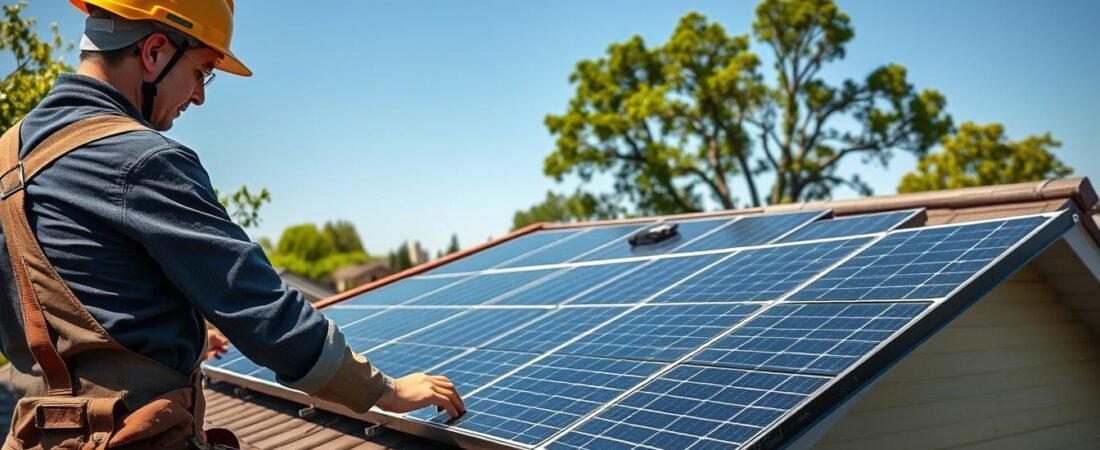
Ready to add clean energy and save on bills? This friendly guide walks you through the full process for a typical U.S. project. Expect planning, design, permits, the physical install, inspection, and final approval to turn the system on.
Most residential installs take one to three days on the roof, but the overall timeline often stretches longer because of design, permitting, and scheduling. We preview key parts beyond the panels like inverters, racking, safety disconnects, and optional batteries so the scope is clear from the start.
Terms you will see: grid-tied (connects to the utility), interconnection (utility agreement), AHJ (authority having jurisdiction), inspection, and PTO (Permission to Operate). These short definitions make later steps less intimidating.
This guide mirrors how homeowners go solar today. It is an easy, step-by-step walkthrough to help you choose system size, equipment, and a qualified installer so your new system runs reliably for decades.
Is Home Solar Right for Your Home and Budget in the United States?
Deciding whether to add on-site clean energy starts with two simple checks: will it lower your electricity costs, and can your roof make enough power? A quick reality check saves time and helps you plan financing and expectations.
How solar energy can lower electricity bills over time
On-site generation offsets what you buy from the grid. That means the system produces power during the day and reduces monthly utility charges. While there is an upfront cost, many homeowners recover that outlay over years through lower bills and incentives.
Roof, sunlight, and shading factors that can make or break production
Roof direction, slope, and shading matter more than brand names. North-facing or heavily shaded rooflines in the U.S. cut output significantly.
Even small obstructions can reduce production across the entire array. A site assessment looks for usable roof area, shading patterns, and any repairs needed before you install solar.
What the Department of Energy says about accessibility
The U.S. Department of Energy reports that since 2008 hundreds of thousands of units have been added nationwide, and public investments have helped lower costs and broaden access.
There’s no one-size-fits-all answer. For many, a realistic next step is to compare current annual electricity use with expected system production. If you want an overview of trade-offs and local pros and cons, read this panel pros and cons.
- Ask: How much of your monthly bill do you want to offset?
- Check: Is your roof sunny most of the day?
- Plan: Consider financing to spread the initial cost.
Plan Your Energy System by Measuring Your Home’s Energy Needs
Begin with your electric bills. Gather twelve months of statements and find the monthly kWh used. Add those monthly numbers to get your annual electricity total.
Look for patterns. Note peak months. Cooling or electric heating can spike use. These trends change the system size you’ll need and affect expected production.
How to read electric bills to estimate annual electricity usage
Find the line that lists kWh by month. Some utilities show a 12-month table. If not, record each month and total it. That annual kWh is the baseline for sizing and savings estimates.
Choosing the right system size for your household and future power use
Match annual production to annual consumption, or choose a target percentage to offset. Plan for future loads like an EV or heat pump. If your roof can’t support enough panels, consider ground-mounts, efficiency upgrades, or scaling goals.
- Reality check: Accurate usage numbers lead to better quotes and fewer permit surprises.
Solar Panel Installation at Home: DIY vs Hiring a Licensed Installer
Choosing between DIY and hiring pros hinges on safety, code, and long-term value. Use this section to measure your skills against local rules and the typical risks of a residential project.
When DIY can work and the skills you’ll need
DIY means a homeowner-led build or kit-based project. It can suit simple roofs, strong tool skills, and willingness to handle permits and inspections.
You’ll need safe ladder and roof experience, accurate measuring and layout, flashing and fastening know-how, and comfort coordinating electrical hookups to code.
Why many projects are safer and smoother with pros
Licensed installers bring design experience that often boosts production and avoids waterproofing and wiring mistakes.
“Hiring a pro often saves time, reduces risk, and smooths permitting and inspection.”
Pros also manage utility paperwork and offer clearer warranties and after-sales support, which matters over decades.
How to compare multiple installers, warranties, and support
Get at least three written quotes and compare: equipment brands, workmanship warranty length, and any production guarantees.
- Ask about monitoring access and response times for repairs.
- Compare total costs, but weigh long-term service and warranty coverage more heavily.
- Check whether your AHJ requires a licensed contractor to pull permits in your area.
Decision filter: If local rules are strict, your roof is steep, or you lack electrical experience, hiring an installer is usually the safer choice.
Finalize Solar System Design, Equipment Choices, and Financing Options
A final equipment plan ties each choice to real savings and code requirements before the crew shows up. This step locks in layout, capacity, and the payment approach so quotes match the finished project.
Picking panels, inverters, and monitoring gear
Placement and inverter type impact output. Higher-efficiency panels save roof space. String inverters are simple; microinverters improve per-panel performance and shading response.
Monitoring lets you spot faults fast and confirm expected solar energy production.
Battery storage for backup and self-consumption
Batteries add backup power and let you use midday generation later in the evening. They boost self-consumption and can reduce peak utility charges where rates vary.
“Batteries require wall space, ventilation, and final commissioning for safe, reliable operation.”
Buy, loan, or lease: matching costs to goals
- Cash: Highest long-term savings but big upfront cost (many U.S. systems range $15,000–$30,000 before incentives).
- Loan: Spreads cost and keeps ownership.
- Lease: Lower start cost; less equity and different warranty terms.
Compare lifetime value, warranties, and incentives. For an owner-focused walkthrough, see this four-step homeowner guide.
Schedule the Site Assessment and Prep Your Roof or Property
The on-site assessment turns plans into reality by verifying roof space, sunlight, and structural readiness before crews arrive.
What an assessor checks
Installers measure roof planes precisely and map usable area for panels. They record shade patterns at different times and inspect shingles, flashing, and decking for wear.
When to re-roof before work
If your roof will need replacement within five years, replace it first. Bundling re-roofing with the install often saves money versus removing a finished array later.
Roof-mounted versus ground-mounted choices
Choose based on yard space, shading, access, and aesthetics. Ground mounts add flexibility but may need trenching for wiring and extra permits.
“Treat roof condition as a hidden cost—fix issues now to avoid remove-and-reinstall fees later.”
| Factor | Roof-Mounted | Ground-Mounted |
|---|---|---|
| Space needed | Limited to roof planes | Depends on yard availability |
| Shading impact | Depends on orientation | Easier to avoid shade |
| Maintenance access | Requires roof access | Easier ground access |
| Permits & wiring | Simpler in many areas | May need extra trenching |
Prep tips: Trim vegetation, note roof age, and list any upcoming upgrades that affect system sizing. This speeds the assessment and helps installers give an accurate design and quote.
Permitting and Utility Interconnection: What to Expect and Who Handles It
Before crews climb the roof, two approvals must be in place. Most U.S. projects need a local building permit from the Authority Having Jurisdiction (city or county) and a separate interconnection approval from your utility to operate a grid-tied system.
Who usually files the paperwork? In many areas the installer prepares and submits permit packets, responds to AHJ comments, and handles the utility application. Still, homeowners should know what is being filed in their name and the expected timeline.
What the permit and interconnection packets typically include
- Site plan showing roof or yard layout and system placement.
- Code-compliant electrical wiring diagram and switch labeling.
- Equipment spec sheets and certifications for inverters and racking.
- Signed forms for HOA approval if required by neighborhood rules.
What the utility reviews and why it matters
Utilities check that the system can safely connect to the grid. They often require a dedicated disconnect, specific labeling, and sometimes a grid-export limit. Their review protects meter safety and local lines.
Timing expectations and a practical tip
Approval time varies widely by area and system complexity—from near-instant online approvals to several months for large or unusual systems. Local staffing and backlog are common causes of delay.
Tip: Ask your installer or the AHJ for current review times and how quickly revisions are returned. That simple question can help you plan the final steps and reduce surprise delays.
Equipment Delivery and Physical Installation of the Solar Panels
Delivery day kicks off with a careful inventory and safe staging so crews can work without surprises. Teams check the bill of materials, inspect for shipping damage, and stack modules where they are easy to lift.
Mounting and racking basics for a secure fit
Installers locate rafters or structural points and use flashed mounts to prevent leaks. Rails are secured with torque-specified fasteners and sealed boots so the array resists wind and weather.
Inverter choices: microinverters vs string inverters
Microinverters mount near each panel for per-unit monitoring and better performance in shade. String inverters sit on a wall, centralizing conversion and simplifying service access.
Wiring, safety shutoffs, and core electrical gear
Expect conduit runs, junction boxes, grounding conductors, and labeled AC/DC disconnects. Rapid shutdown devices and clear labels are common code requirements to protect first responders.
Adding a battery during the work
Choose a ventilated, accessible location with required clearances. Technicians mount the battery, connect communications to the inverter or gateway, and run commissioning so storage appears in monitoring.
How long installation day usually takes
Most residential installs finish in one to three days depending on complexity. For DIY projects, plan roughly two hours per panel plus extra time for wiring and inspection prep.
“Electrical and roof work carry the highest risks; many DIYers still hire a licensed electrician for final connections.”
Inspection, Final Approvals, and System Activation (Permission to Operate)
A final inspection is the safety checkpoint that clears your system for safe use and grid connection. Inspectors confirm the work matches the approved plans and that wiring, grounding, and labels meet code. This step protects against electrical and fire hazards.
What inspectors commonly check:
- Correct labeling of equipment and shutoffs.
- Proper grounding and secure attachments.
- Neat wiring and continuous conduit runs.
- Required disconnects and conductor sizing per plans.
Utility approval and energizing the system
The utility’s sign-off is separate from the city or county inspection. Even when the AHJ approves, the electric company must grant Permission to Operate (PTO) to energize and interconnect. Some utilities accept the inspection record; others perform a final visit.
Expect the PTO step to add extra time. Turnaround varies by utility workload and local procedures. Keep permits and plan sets handy so the installer can submit them quickly for the utility review.
What “turning it on” looks like: Technicians verify inverter status, confirm monitoring goes live, and watch production numbers appear in the portal. You should see immediate generation in daylight and labeled breakers ready for operation.
| Checkpoint | Inspector Focus | Utility Role | Homeowner Tip |
|---|---|---|---|
| Labels & Shutdowns | Clear, code-compliant marking | Confirms disconnect meets requirements | Keep a photo record of labels |
| Wiring & Grounding | Secure, neat conduit and bonds | Verifies safe interconnection | Store plan sets for quick submittal |
| Mounts & Weatherproofing | Roof attachments and flashing | May require final meter swap | Note any inspector comments for fixes |
| Monitoring & Commissioning | Basic function check | Approves system to energize | Confirm portal access and alerts |
Check local service options if you need help with permit follow-up or utility paperwork. A quick, organized submission often speeds PTO and gets your energy system producing sooner.
Conclusion
Follow a few practical steps and you can move from research to a working system: check if your home suits panels, measure energy use, choose DIY or hire pros, finalize design and financing, complete permits, install, pass inspection, and get PTO.
A well-designed setup can deliver steady power for decades. The Department of Energy notes wider access and falling costs since 2008, and many systems offer roughly 25 years of productive operation with proper care.
Compare multiple quotes, verify assumptions about shading and output, and prioritize quality gear and clear warranties. Gather your last 12 months of bills and schedule quotes or a site assessment to turn plans into action.