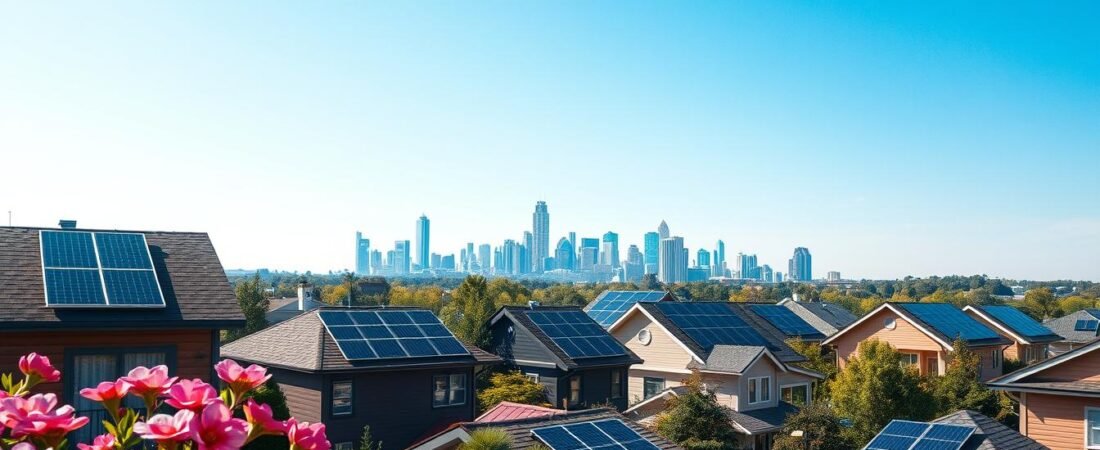
If you’re a homeowner in Atlanta, GA wondering about price and payback, this quick intro lays out the essentials.
On average, residential systems in the area run about $2.47 per watt installed. A typical 13.6 kW system — the local average size — costs roughly $33,556 before incentives.
That investment often pays off over time. With about 5.1 peak sun hours per day and more than 213 sunny days yearly, homeowners can expect solid generation and long-term savings.
Over a 25-year span, many households save around $23,002 on electricity. Returns improve further when you factor in federal and local incentives and rising utility rates.
In short, understanding the local numbers helps you judge whether a system is a smart financial move for your home and budget.
Understanding the Solar Panel Cost Atlanta GA Landscape
Local market trends shape how much a residential system will run you today.
Larger systems often lower the per-watt price because installers can buy panels in bulk. Choice of panel type matters too: monocrystalline options offer higher efficiency than older polycrystalline modules, and that influences the system size you need for the same power output.
- Permitting, inspections, and installer margins create real price differences between projects.
- Homes with bigger energy demands require more panels, which raises the total price but boosts long-term savings.
- With local electricity prices up about 18% since 2020, an upfront investment can hedge rising monthly bills.
“Ask installers for usage-based data so you get a system sized to your home — not a one-size offer.”
| Factor | Impact | Typical Influence |
|---|---|---|
| System size | Lower per-watt with larger installs | High |
| Panel type | Efficiency and space needs | Medium |
| Permits & inspection | Adds fixed fees per project | Low–Medium |
| Local prices & incentives | Affects payback time and value | High |
Compare quotes from several companies and ask for clear data on how many panels you’ll need. That helps you judge average price versus long-term money saved.
Factors That Influence Your Total Installation Price
Upfront price differences usually come down to three areas: equipment quality, required system size, and installation complexity.
Equipment Quality
Higher-grade modules and inverters raise the initial outlay but lower long-term problems. Monocrystalline units are the most efficient choice for most homes and often justify their higher price with better output and warranties.
System Size Requirements
The bigger the system, the higher the total bill. For context, a 5 kW setup runs about $12,338, while a 10 kW system is roughly $24,677.
Per watt prices drop as size grows, but the total investment still scales with energy needs and roof space.
Installation Complexity
Roof angle, shading, and electrical upgrades add labor and parts. Installer margins also vary; pick a company that stays in business so you have support for 20–25 years.
- Confirm high-quality components are listed in every quote.
- Compare multiple offers and ask for production data tied to your roof.
| Factor | How it Affects Price | Typical Influence |
|---|---|---|
| Equipment quality | Higher efficiency & longer warranties raise upfront price | High |
| System size | Total investment increases with required power | High |
| Installation complexity | Steeper labor, extra hardware, and permitting | Medium |
“Ask installers for production estimates for your roof so you get a system sized to your actual needs.”
Analyzing the Financial Benefits of Solar Energy
Installing a quality setup can cut your bills now and build substantial savings by year 25.
Typical savings are large: a local home can save about $45,000 over 25 years, with monthly reductions starting near $104. Rising electricity prices (about 18% since 2020) make self-generated energy worth more each year.
Most utilities no longer use traditional net metering. Instead, net billing or export credit programs apply. That changes how you model value and payback.
- Average payback time for a system in Georgia is roughly 10.1 years.
- Generating your own electricity reduces what you draw from the grid and shields you from utility price spikes.
- Professional installation maximizes production and long-term savings.
“Understand how your utility credits exported power to estimate realistic monthly savings.”
Ready to evaluate numbers for your home? Get a custom estimate to see projected savings and payback for your investment.
Navigating Federal and Local Solar Incentives
Incentives and rebates can cut your upfront bill by thousands when combined correctly.
Federal tax credit details:
Federal Tax Credit Details
The federal investment tax credit currently covers 30% of the value of your solar system. Claim it on your tax return after installation to reduce your federal tax liability.
It is a national credit, so homeowners across the United States can use it. Always confirm eligibility and consult a tax professional to file the credit correctly.
Local Utility Rebates
Local programs add meaningful savings on top of the federal credit.
- GreyStone Power: member-owners can get a one-time rebate of $450 per kW AC for systems up to 10 kW.
- Georgia Power: offers a community option so customers can subscribe to blocks of clean energy without installing rooftop modules.
- Combining rebates and the federal tax credit can reduce net installation expenses by thousands.
“Take advantage of every eligible tax credit and utility rebate — it’s how many homeowners make the project affordable.”
| Incentive | What it Covers | Typical Limit |
|---|---|---|
| Federal tax credit | 30% of system value claimed on taxes | Applies nationwide |
| GreyStone Power rebate | One-time payment to members | $450 per kW AC, up to 10 kW |
| Georgia Power community program | Subscription to offsite clean energy blocks | Depends on subscription terms |
Action steps: verify program rules, check funding windows, and ask installers which incentives they can help document. This ensures you capture every available credit and rebate for the best net savings.
Comparing Cash Purchases Versus Solar Financing
Deciding whether to pay cash or finance your system changes both short- and long-term returns.
Cash purchase gives you full ownership from day one. You keep any available tax credit and the resale bump—about a 4.1% increase in home value. Long-term savings are usually higher because there is no interest to pay.
Financing or $0-down loans let many homeowners start saving on electricity immediately with little or no upfront money. Loans spread the price over time, so monthly payments can match or beat your current utility bill.
- Leases and PPAs provide immediate savings and maintenance handled by the provider.
- Owned systems capture tax credits and higher long-term returns.
- Compare total paid with interest versus a one-time purchase to judge real savings.
“A clear side-by-side of cash, loan, and lease options helps homeowners pick the best financial path.”
| Option | Upfront | Ownership | Tax Credit | Typical Long‑term Savings |
|---|---|---|---|---|
| Cash purchase | High | Yes | Claimed by owner | Highest (no interest) |
| Loan / $0-down | Low | Yes after purchase | Claimed by owner | High (interest reduces net) |
| Lease / PPA | None | No | Claimed by owner? No | Moderate (monthly savings) |
Ask installers for a 25-year comparison of purchase versus finance totals. That will show how interest, tax credits, and resale value change your real return on investment per watt and overall.
Evaluating Solar Performance in the Atlanta Climate
Local weather patterns mean a well-sited array will produce steady energy through seasons.
Seasonal Energy Production
Atlanta averages 5.1 peak sun hours per day and more than 213 sunny days each year. That creates reliable generation for most homes.
A 10 kW system in July can power about 3.6 average homes or run central AC roughly 18 hours daily. In December, the same 10 kW setup still supports about 2 homes or heating for 15 hours.
Over a full year, a 10 kW installation offsets roughly 10 tons of CO2. That equals planting about 175 trees and reflects real environmental savings.
Data from NREL PVWatts confirms that local climate makes this region very effective for year-round solar energy production. Professional installers use that data to place panels for maximum power and performance.
- Seasonal output helps predict monthly savings on electricity.
- Proper installation and orientation keep system losses low across years.
“Use local production data to set realistic expectations for savings and performance.”
How to Select a Reliable Solar Installer
Choosing the right installer makes a big difference in how your system performs for decades.
Look for firms with a proven track record. IntegrateSun, LLC has 37 years of experience and over 7,000 projects across 12 states, which signals deep technical know‑how and long-term support.
Compare multiple quotes so you see real price and service differences. Using a marketplace like local price data helps homeowners gather competitive offers and often lowers costs by up to 20%.
- Prefer vetted companies or local, family‑owned installers who answer questions and care about your job.
- Verify reviews, project photos, and permit history before you sign.
- Ask for a clear plan that covers design, panel installation, permitting, and final inspection.
“A reliable company will handle everything from design through final inspection and help you claim incentives.”
Invest time in selection. The right company boosts long‑term savings and keeps your home running smoothly for years.
Exploring Community Solar and Leasing Alternatives
Community subscriptions and lease options make clean energy reachable for many households without rooftop work.
Georgia Power’s Community Solar lets residents subscribe to blocks of clean generation and receive credits on their electricity bill. That makes shared access ideal for renters or homes with roof limitations.
Programs often include income-qualified tiers for households at 200% or less of the U.S. Federal Poverty Guidelines. Those tiers reduce monthly charges and widen access.
Leasing and PPAs, like Palmetto’s LightReach, let homeowners pay only for the power produced. The provider owns and maintains the equipment and claims the tax credit, often passing lower monthly rates to you.
- Subscribe to community offerings for bill credits without installing panels.
- Choose a PPA to avoid upfront investment and maintenance duties.
- Ask providers to explain how tax credits and savings are shared.
“These alternatives make clean generation practical for more homeowners while reducing household electricity costs.”
Conclusion
Wrapping up, a rooftop system can shield your bills from future utility hikes while building home value.
With about 5.1 peak sun hours per day, a properly sized system delivers reliable power and can translate into thousands in long‑term savings. Pairing that with the federal tax credit and local rebates cuts the net investment substantially.
If you prefer no upfront money, leases and PPAs let you start saving on electricity immediately. Compare quotes from multiple companies so you get the right size, installation plan, and price for your home.
Learn more about Georgia incentives and net‑billing details at Georgia incentives and net‑billing details to finalize your decision.