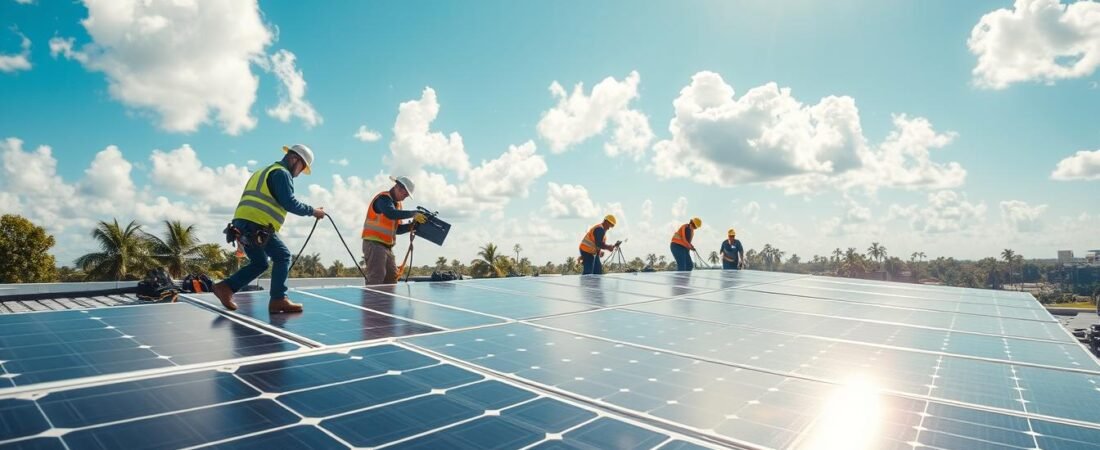
Ready to cut energy costs and gain independence from the grid? This friendly guide walks homeowners through the essentials of solar adoption in the Sunshine State. You’ll get clear, practical steps to plan a smooth transition and understand long-term benefits.
We explain technical requirements for a reliable system in plain language. Learn how permits, roof checks, and local rules shape your project. Our goal is to make the process feel doable, not daunting.
Going solar florida residents can lower bills and help the environment. This guide highlights why the region offers strong savings and what to expect during each phase of a project.
Use this introduction as your starting point. The following sections dive into permits, costs, and tips from industry experts so you can act with confidence.
Understanding Solar Panel Installation Florida
With about 237 sunny days each year, residents enjoy a strong advantage when they choose to install solar panels. Roof placement matters most. South-facing sections and unshaded areas will yield higher daily power output.
A smart setup begins with an assessment of roof pitch and orientation. That check helps determine how many panels you can fit and the likely annual energy yield.
Positioning influences performance: tilt, spacing, and shade from trees or nearby buildings all change results. Sellers and pros will model expected output before any work begins.
- Estimate your yearly power use.
- Measure usable roof area.
- Compare output vs. local rates and incentives.
| Factor | Why it matters | Action |
|---|---|---|
| Roof orientation | Direct sunlight increases daily output | Prefer south or unshaded slopes |
| Available area | Limits total number of panels | Measure and plan layout |
| Household demand | Determines system size | Review past electric bills |
For a step-by-step overview, see the homeowner’s guide to help plan your project.
Your Legal Rights as a Solar Homeowner
Before you place equipment on your roof, know the protections that back your choice.
Net Metering Protections
Net metering gives homeowners the right to send excess power back to the grid. Utilities must allow connection so you can offset bills when your system produces more than you use.
Use net metering to credit exported energy and reduce monthly costs. This access is a practical benefit for anyone who plans to install solar panels at their home.
Property Rights and HOAs
The Florida Solar Rights Act (FSRA 163.04) protects a property owner’s right to add renewable equipment on private property.
HOAs can set reasonable rules about placement and appearance, but they cannot ban panels outright. Also, a statewide property tax exemption prevents your property tax from rising due to added system value.
| Right | What it means | Homeowner action |
|---|---|---|
| FSRA 163.04 | Legal protection to install equipment | Confirm local code and proceed |
| Net metering | Credit for excess energy sent to utility | Apply with your utility company |
| HOA limits | Can impose reasonable placement rules | Work with the HOA to meet guidelines |
Evaluating the Financial Viability of Solar
Crunching the numbers early helps you see if a rooftop system makes sense for your budget.
Use your average monthly consumption — about 1,142 kWh for many Florida homes — to size a system. At roughly $3.04 per watt, homeowners often see a typical payback period near 11 years.
Understanding Energy Consumption
Track year-round usage and seasonal peaks. That tells you how many panels or panel systems you need and what portion of your power bill you can cut.
Solar Buy-Back Rates
Net metering in the state credits exported energy in kWh, not dollars. Your utility company will log credits that offset later usage. This matters whether you buy outright or choose a power purchase agreement from a provider.
“A clear payback estimate turns uncertainty into a plan.”
- Average costs make systems attractive for long-term savings.
- Net credits reduce bills during low-production months.
- Compare offers and check your utility provider rates before purchase.
Key Benefits of Transitioning to Clean Energy
Choosing renewable power can boost your home’s value and cut ongoing costs.
Financial gains are a major motivator for many homeowners.
Data shows an average home value increase of 4.1% after adding solar panels. That lift helps when you sell or refinance.
Net metering lets you send excess generation back to the grid and claim credits. Those credits can eliminate monthly utility bills during many months of the year.
The state-level property tax exemption means added system value won’t raise your property taxes. That protects your return on investment.
- Less dependence on a single utility company improves household control over power use.
- Reduced bills and long-term savings make systems a smart financial move.
- Every homeowner who adopts clean energy supports a quieter, cleaner environment.
| Benefit | What it means | Action for homeowner |
|---|---|---|
| Home value increase | Average 4.1% boost in resale value | Include system value in listing and appraisals |
| Net metering | Credits for exported power | Register with your utility and track credits |
| Property tax protection | System value excluded from taxable property | Confirm exemption with local assessor |
“Investing in clean energy can pay back both in savings and in a healthier neighborhood.”
Important Factors to Consider Before You Buy
A clear look at weather, roof fit, and local rules helps you avoid surprises down the road.
Climate and Weather Considerations
The Sunshine State averages 237 sunny days each year, which boosts expected energy output. That makes systems more effective than in cloudier areas.
Your roof orientation and shade matter most. South-facing slopes usually deliver the best daily yield. Trees, chimneys, or nearby buildings can cut production significantly.
Compare the cost and expected savings. High upfront cost often pays off through lower utility bills over time. Check whether local net metering credits excess power back to your account.
- Assess how many panels fit your usable roof area.
- Estimate annual output and match it to household demand.
- Run a payback period calculation to see when the benefits going solar outweigh the cost.
“A short site audit and a clear payback estimate will show whether the system is worth the investment.”
Navigating Potential Risks and Industry Scams
Scams and shady offers can turn a smart home upgrade into a costly mistake.
Homeowners should vet every company carefully. WFTV reported cases in Fort Lauderdale where bad actors left people with unexpected bills.
Watch for high-pressure sales, unclear contracts, or claims of exclusive utility affiliation. Solar United Neighbors of Florida has warned about phone scams that use fake utility company names.
Beware of predatory power purchase agreements that promise low upfront cost but lock you into poor long-term terms. A reputable solar panel system provider will explain the payback period and how net metering affects your grid credits.
| Risk | Sign | Action |
|---|---|---|
| Fake affiliation | Caller claims utility ties | Verify with your utility |
| Predatory contract | Vague pricing or long term lock | Ask for a clear written estimate |
| Unlicensed company | No license or references | Check reviews and licenses |
Tip: Work only with verified professionals. Doing so protects your property and ensures your energy investment is truly worth the cost.
Selecting the Right Professional Installer
Choosing the right installer makes the difference between a smooth upgrade and months of frustration.
Hire a licensed, insured company that knows local codes and permitting for solar florida projects. A qualified provider will size your system to match household needs and safety rules.
Ask for references, request past project photos, and verify licenses. Check warranties and confirm who handles permits, inspections, and utility interconnection.
Maximize incentives. A good contractor helps you claim the property tax exemption and other credits that improve the payback period.
- Get at least three written bids.
- Compare equipment specs and warranties.
- Confirm the final purchase agreement before signing.
“A licensed installer protects your home, your investment, and your peace of mind.”
| What to check | Why it matters | Homeowner action |
|---|---|---|
| License & insurance | Protects property and liability | Verify with state records |
| References & photos | Shows real job quality | Call past customers |
| Warranties & service | Long-term system reliability | Get terms in writing |
For guidance on choosing a contractor, review a trusted hiring checklist at experienced contractor tips or explore local service offers at professional provider services.
Conclusion
Quick take: This guide helps you decide whether going solar florida makes sense for your home by showing costs, credits, and timelines.
We covered how to check if panels are worth it, how net metering affects savings, and what the typical payback period looks like. Use those points to compare offers and set clear goals.
Prioritize a vetted company so your installation goes smoothly and warranties are honored. Good professionals protect value and help you claim incentives.
The benefits going solar include lower bills, higher resale value, and cleaner energy for your neighborhood. When you’re ready, review bids, confirm metering rules, and act with confidence.